
We have all been there. The early morning walleye bite was incredible, but the moment the sun tops the treeline and turns into a bright, bluebird sky, the action dies. By noon, the lake feels like a desert, and most boats pack it up and head back to the cabin.
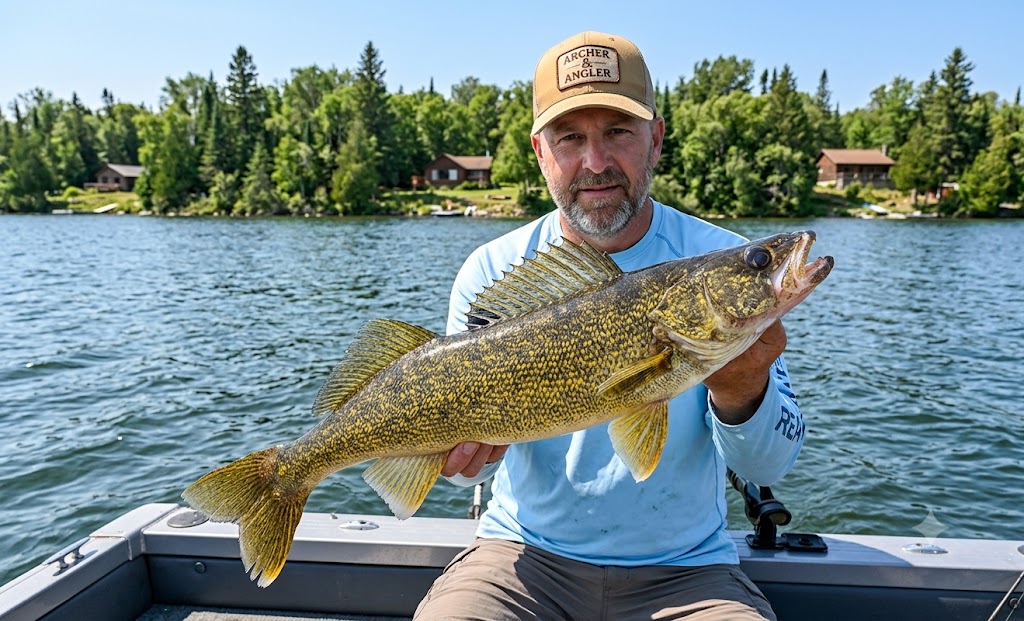
It is a common myth that walleye stop feeding when the sun is bright. Because walleye possess highly sensitive, light-gathering eyes, they simply loathe the intense glare of a mid-day sky. They don’t stop eating; they just retreat deep into thick weed lines or slide down into deep, dark bottom transitions where the sun cannot penetrate.
If you know how to hunt them in the dark zones, you can have the entire lake to yourself and catch your biggest fish of the day while everyone else is eating lunch.
1. Target the Windward Mud Flats
If there is a steady summer breeze blowing across the lake, look at your map and locate deep mud flats (22 to 30 feet) where the wind is pushing directly against the structure. The waves mix up the sediment, creating a natural, cloudy canopy underwater that shields the walleye’s sensitive eyes while disorienting baitfish.
2. The Tactic: Heavy Bottom Bouncers and Spinner Rigs
To get down to these deep, sun-evading fish, you need to use heavy-duty bottom bouncers (2 oz to 3 oz) paired with a crawler harness.
- The Action: Troll at a slow crawl (0.8 to 1.2 mph). Let the heavy lead weight drag continuously along the mud bottom, kicking up little puffs of debris.
- The Rig: Use a two-hook harness tipped with a massive, live nightcrawler. Choose metallic blades (gold or copper) that flash cleanly down in the darkness to mimic a fleeing perch.
BOTTOM BOUNCERSSPINNER BLADES
Leave a Reply
You must be logged in to post a comment.