
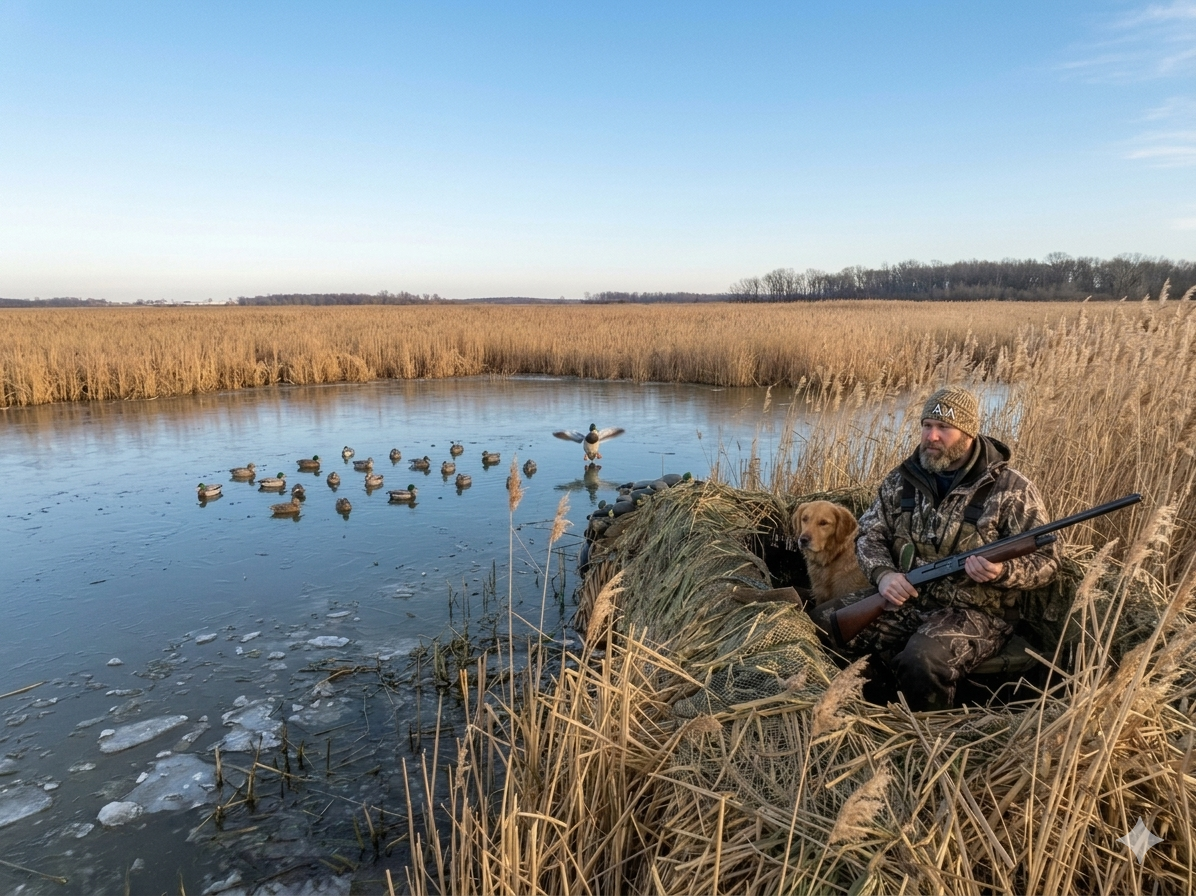
Hide from the Sky: The Secret to Perfect Waterfowl Blind Concealment
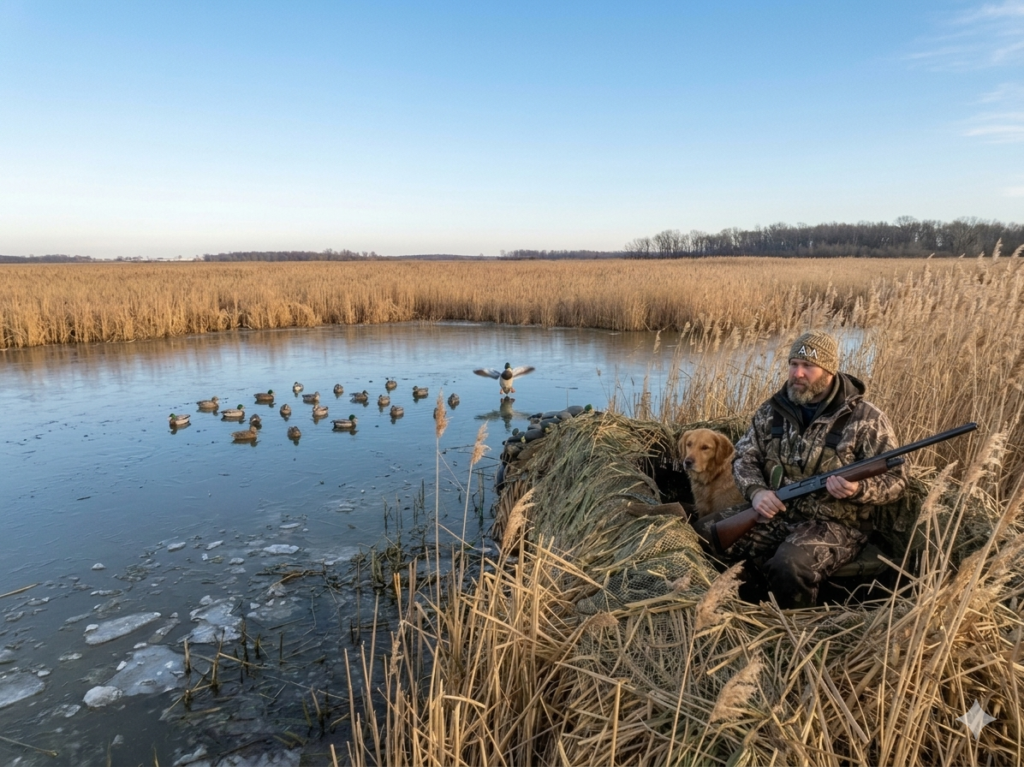
You can have a thousand dollars worth of elite decoys in your spread and an app-controlled motion setup dialed in perfectly, but if your blind stands out against the natural marshscape, ducks will flare away every single time.
Waterfowl possess incredible eyesight. They easily notice sharp geometric lines, unnatural dark shadows, and the dead-giveaway shine of a human face or an uncovered gun barrel.
As early resident goose and duck openers approach across Canada, spending a weekend optimizing your blind concealment is the most important step you can take. Here is how to blend into the landscape seamlessly.
1. The Golden Rule: Match the Local Floor
Never brush your blind using vegetation collected from your backyard or a different location. If you are hunting an agricultural corn field edge, you must brush your layout blind completely with dry corn stalks. If you are tucked into a cattail marsh, you must use local, dead cattails. Even a slight variation in the shade of green or tan looks like a glaring red flag from the sky.
2. Eliminate Shadows and Mud Your Fabric
Brand-new layout blinds or boat blinds have a factory sheen on the fabric that shines brightly under early morning sunlight.
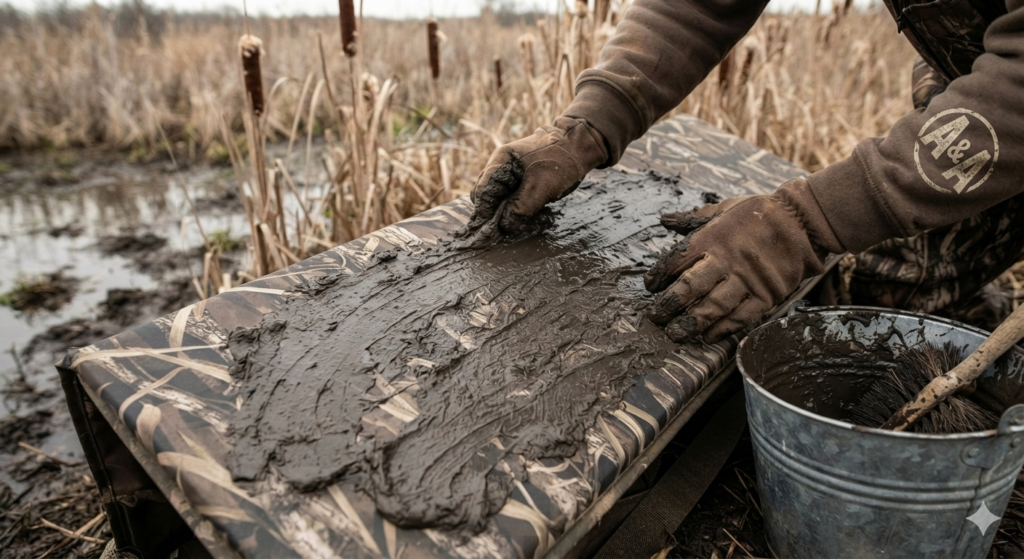
- The Solution: Before taking a new blind to the field, mix up a bucket of thick, dark pond mud and smear it completely over the fabric. Let it dry and brush off the clumps. This leaves a dull, ultra-flat finish that absorbs light beautifully.
- Use bundle straps to weave native grasses across the top framework of your setup to completely break up the harsh, straight-line shadow of the blind’s roof box.
ZIP TIE PACKSCAMO CONCEALMENT GRASS
Leave a Reply
You must be logged in to post a comment.