
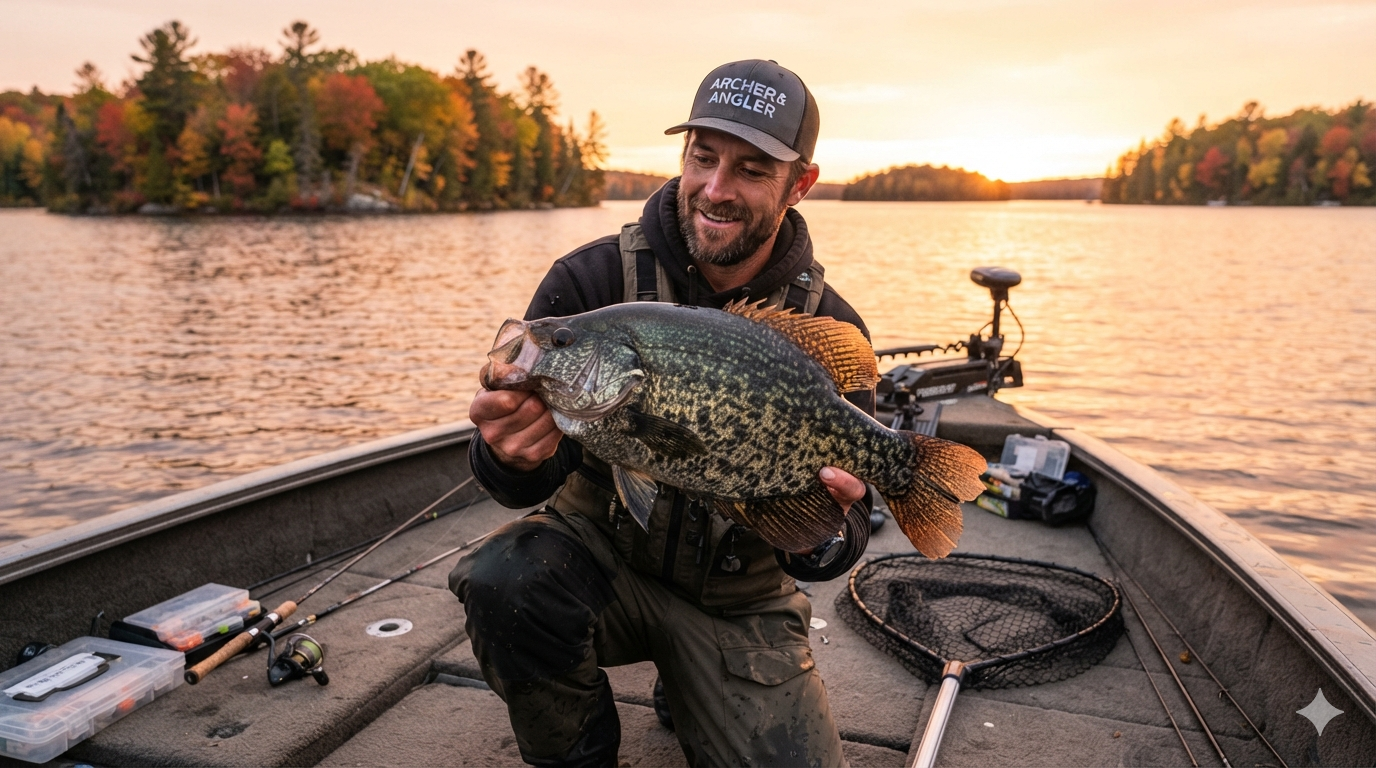
When late August rolls around and summer water temperatures begin their first steady drop, bluegill and bass aren’t the only fish undergoing major seasonal shifts. Panfish—specifically crappie—begin leaving their shallow summer weed cover to form massive, tightly packed schools out in open water basins.
If you continue casting small spinners along shoreline docks or shallow weed edges, your catch rate will plummet.
During the early fall transition, crappie shift their diet entirely toward young-of-the-year baitfish suspended in deep water. Catching them requires switching from visual shoreline bank-beating to electronic deep-water sniper tactics.
Here is how to locate and haul in autumn slab crappies when they make the open-water move.
1. Locate the Open Basin Thermocline
Early fall crappies don’t sit on the bottom. Instead, they suspend midway down in the water column over deep lake basins (typically 25 to 35 feet deep).
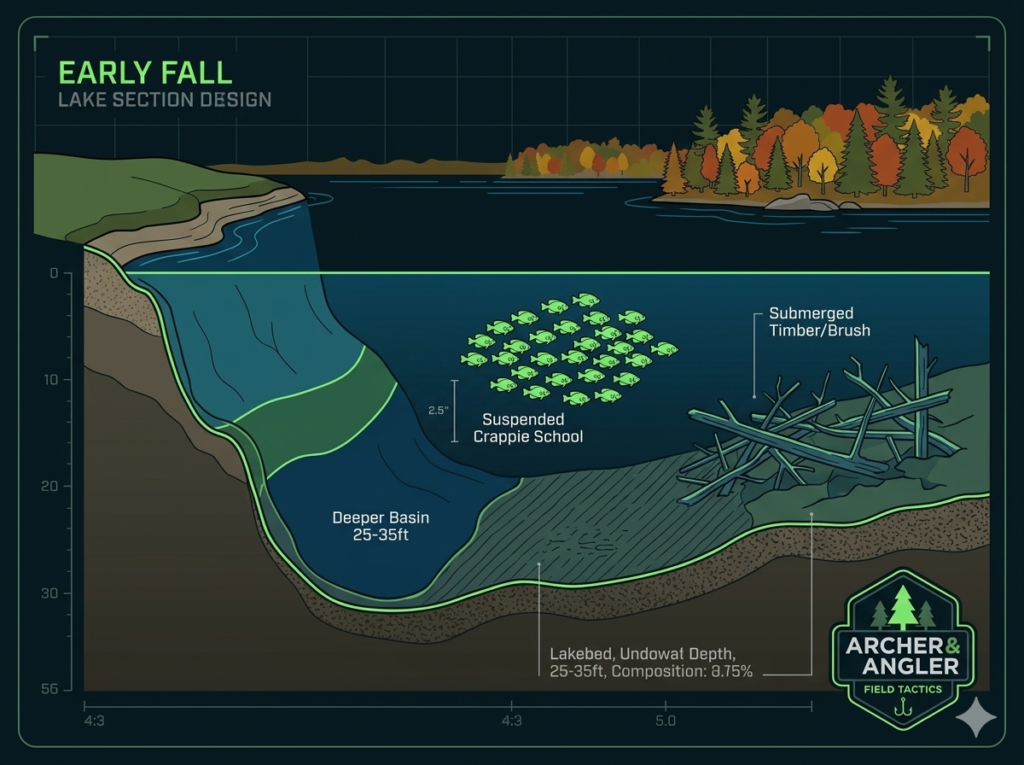
Use your fish finder to scan deep pockets adjacent to summer spawning bays. You are looking for dense, “cloud-like” clusters suspended anywhere from 10 to 18 feet below the surface.
Key Gear for Basin Mapping:
2. The Vertically Suspended Micro-Jig
Because crappies have upward-facing eyes, they almost always feed on baitfish swimming above them. If your bait drops even six inches below the school, they will ignore it completely.
The golden rule of early fall crappie fishing is to keep your bait 1 to 2 feet above the highest fish in the school.
The Setup:
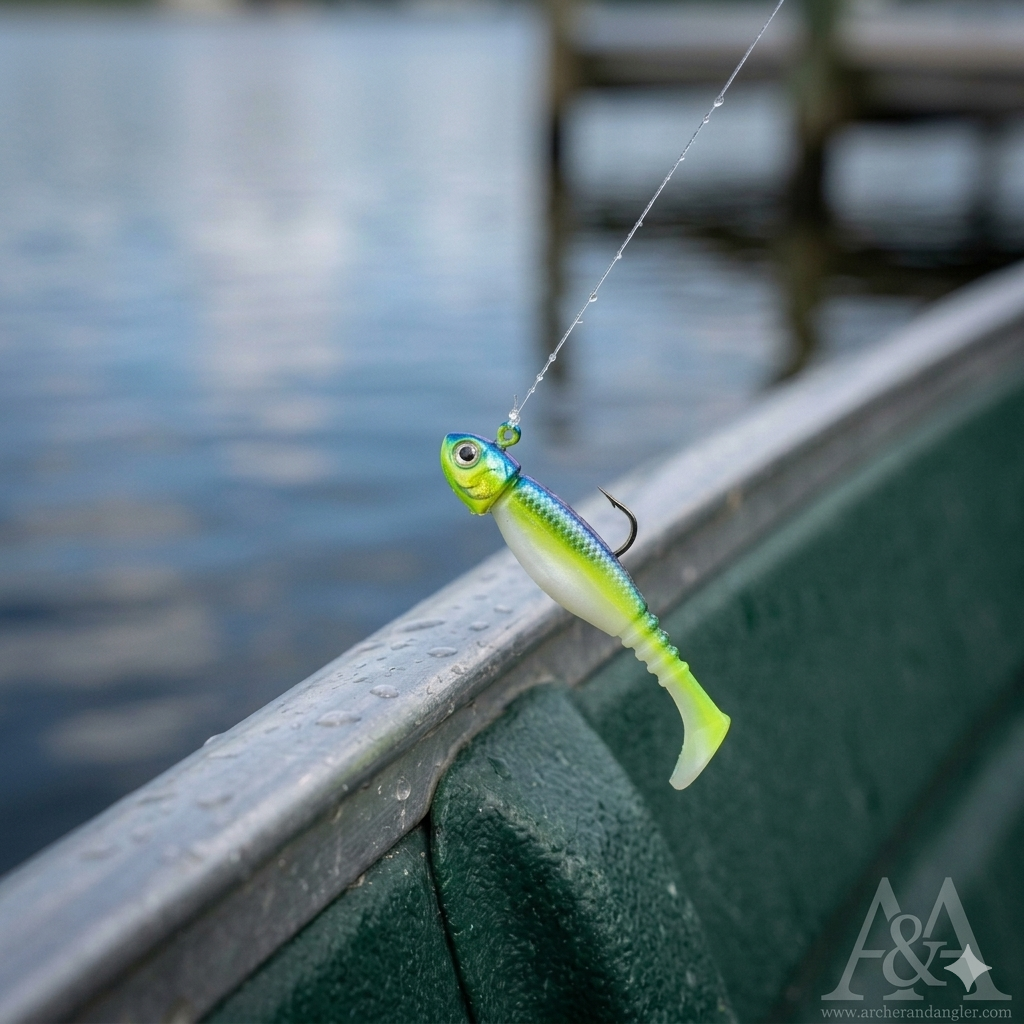
- The Line: Spool up with ultra-thin 4 lb test fluorocarbon or 6 lb yellow high-visibility braid tied to a fluorocarbon leader.
- The Jig: A 1/16-oz or 1/32-oz tungsten jig head. Tungsten is denser than lead, allowing your small profile to drop fast and show up clearly on your sonar screen.
- The Soft Plastic: 2-inch micro swimbaits or straight-tail minnow plastics in white, pink, or chartreuse.
Essential Terminal Tackle Links:
3. The Dead-Stick Technique
When water temperatures drop, aggressive jigging will spook suspended panfish. Once you lower your jig directly above the school, hold your rod tip completely still.
Allow the natural motion of the boat’s drift or slight wrist tremors to impart a subtle, lifelike quiver to the plastic tail. When a slab commits, you won’t feel a heavy strike—your line will simply go slack or feel light as the crappie lifts the bait upward.
Leave a Reply
You must be logged in to post a comment.